I choose to pursue research in the field of rendering technical art.
Interviews with a working technical artist
In an interview with Xian Yu, a former technical artist, I got the first sight of this job. He said, “Technical Art is not about early-stage concept design, it’s actually about solving the practical problems that arise from the concepts.” It is a role that requires integrating all available resources.
Exploration of the Role and Workflow
During the summer, I found some online tutorials about technical art and experienced a few exercises on different visual effects. I picked unity2026 as my main game engine, and try to write some shaders in C# and HLSL.
This is a shader that achieves translucency and light sweep effects. All visual effects can be achieved through code. It starts from object space, going through thousands of matrix transformations before finally being projected onto the screen. Through these transformations, square textures can be seamlessly mapped onto a 3D model via UV coordinates. Similarly, if you want to achieve other visual effects, you can choose different transformation or blending methods.
To make things more accessible and user-friendly, Unity offers Amplify Shader Editor as a node-based visual shader editor (as shown below).
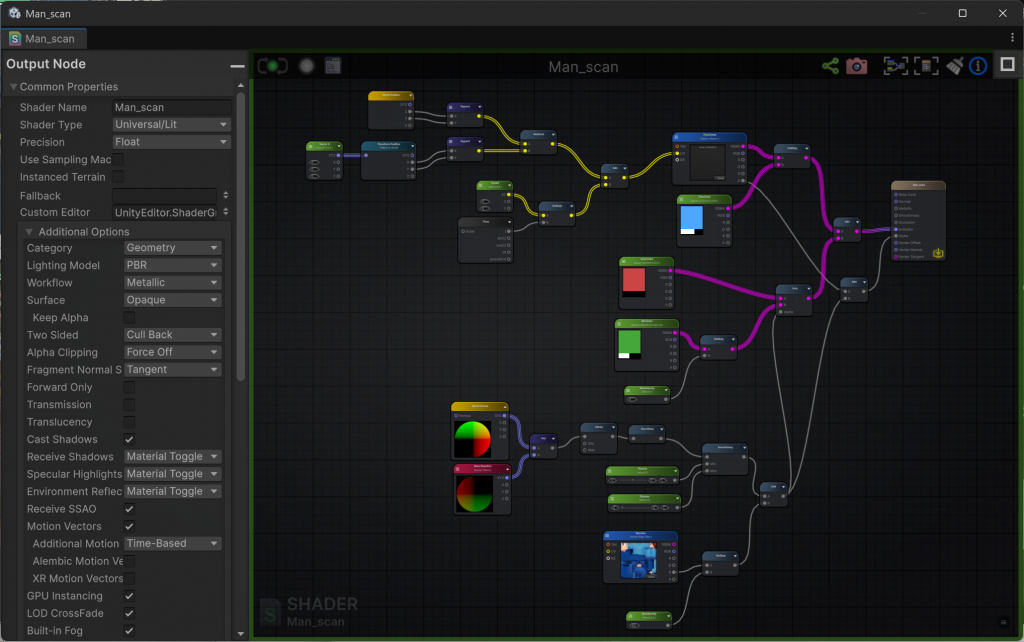
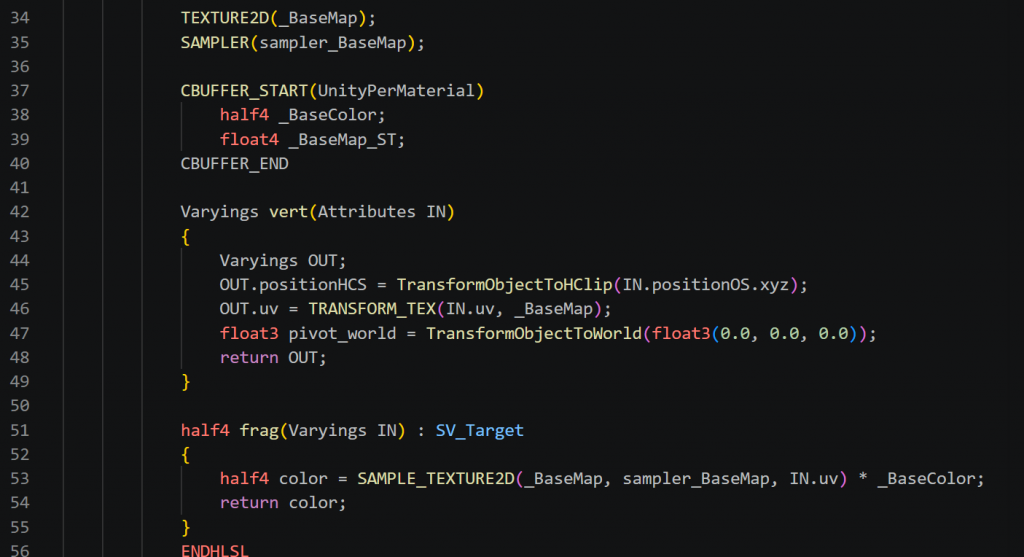
However, industry standards still require Technical Artists to know how to hand-code shaders from zero(as shown below). Studios rarely upgrade their engine versions rashly in production—many companies are still running on Unity 2022 or even earlier LTS versions. They often stuck on the legacy Built-in Render Pipeline where native node-based editors aren’t natively supported like ASE. As a result, once a technical artist joins a studio, they’ll often have to maintain legacy shaders written in Unity’s older CG code language(the predecessor to current HLSL language) or adapt effects for older engine versions. This is why writing shader code by hand becomes essential.
Here are a few implementations of thin-film interference.
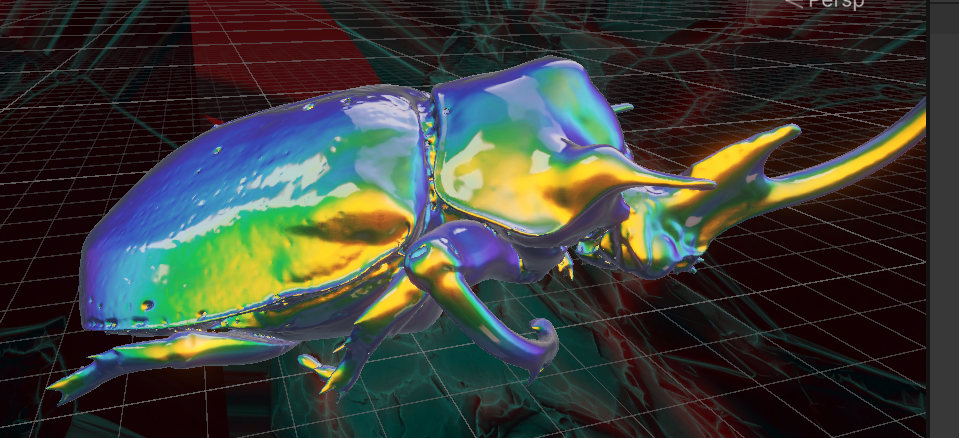
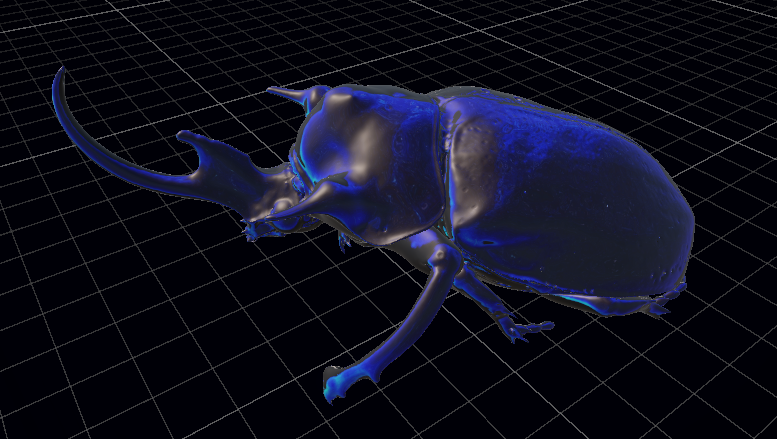

The visual effect comes from this simple texture.
When moving the camera, a custom transformation makes the specular highlights shift with the viewing angle. It was a clever work around a decade ago, before PBR pipelines became the industry standard.
You can use certain faces of a mesh to mask out other models, achieving a “world-within-a-world” illusion.
And also postprocess.
Reflection
The reason I chose this job before exploring is that I already have the programming and mathematical foundation which required for this job. I studied computer science in college and have worked in software development, so it’s easier for me to get started than other artists. Moreover, my favourite game hasn’t had any graphics optimisation in six years, and I’m very curious to know why.
Through my practice, I realised that this job is heavily tied to coding, art is not taking as that important role as I thought before. The role of art in this job is to accumulate some cases in stylisation and to adjust the parameters(which is coding decides to provide or not) based on personal aesthetics, so that the artist can know what the final visual effect should look like. If it’s a team work, it will turn into judging by experience whether a visual effect can be achieved or not while maintaining smooth game performance, and being able to explain to the art team why this or that can not be done.
Well, the low level of artistic involvement actually makes me unsure if this role is right for me. Although writing code can also be a very creative process, it’s often different from artistic creation. Coding demands extreme precision, and I was constantly fixing bugs and answering questions from front-end teams. Being on call 24/7—because a live bug directly means losing money and users—was really stressful for me. In addition, programming heavily encourages “copying”(which is called “pipeling reuse”). In my previous job, my team lead always told us “don’t reinvent the wheel.” In the art world, however, “copying” can end my career. So if this role relies heavily on code, I’m afraid I’ll just fall right back into my old work routine, which I don’t want to. Maybe it’s because I’m still doing super basic work in technical art?
Leave a Reply