While I do my quadruped walk practice, the first thing comes into my mind is to find the rule and reference, then follow the twelve principles of animation and consider the cat’s movement patterns to animate it.
Rule
After carefully reviewing the “2025 Quadruped Walk” PowerPoint, I decided to follow the “Basic Animal Walk Pattern”:

One step is defined as taking one front leg forward once. If it takes 6 frames, I need twelve frames to make a circle.
Reference
I had done some normal animal walking before, also inspired by the powerpoint, I want to do some special walking like tiptoeing – the preparation stage of hunting. (Mostly because I tried to do the trotting but failed…maybe I will try it next time…)
The reference is as follow:
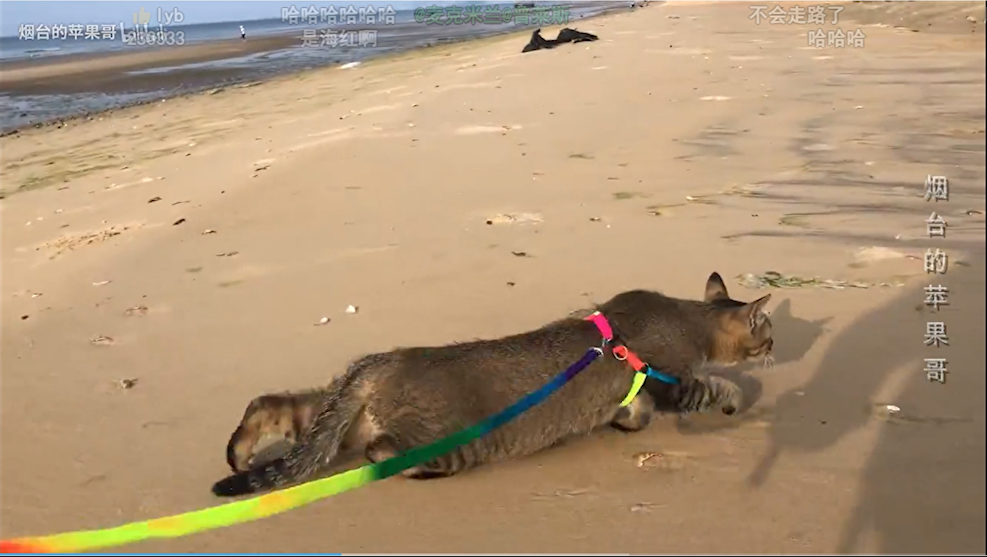
So the cat is very close to the ground and its legs are bent and stretched very severely.
Bone Structure(Squash and Stretch)
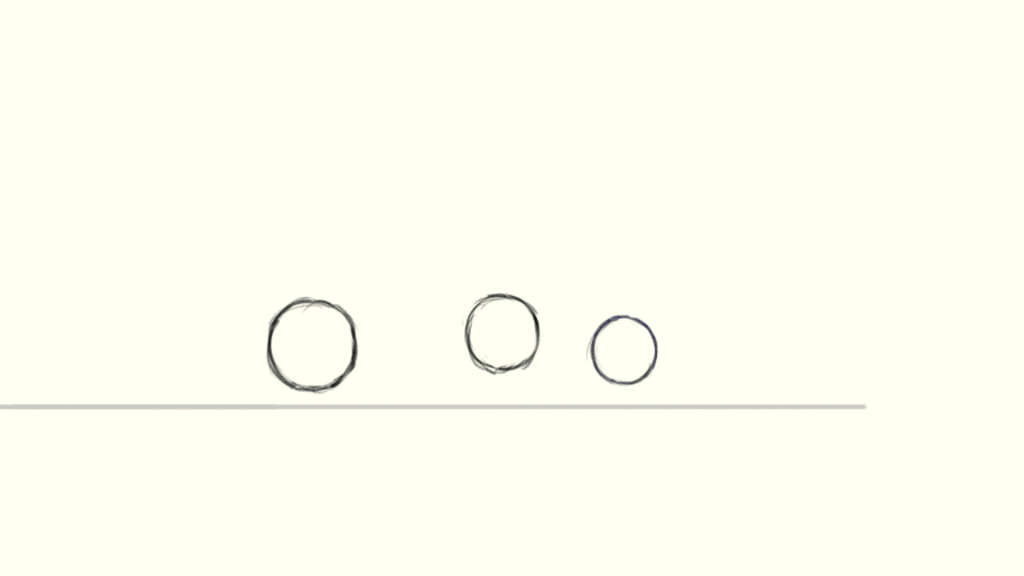
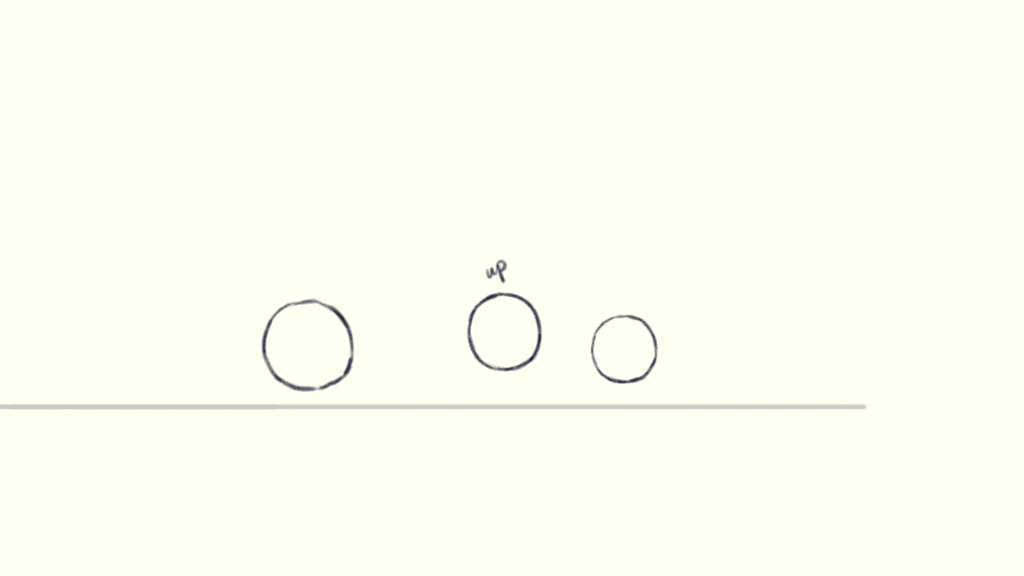
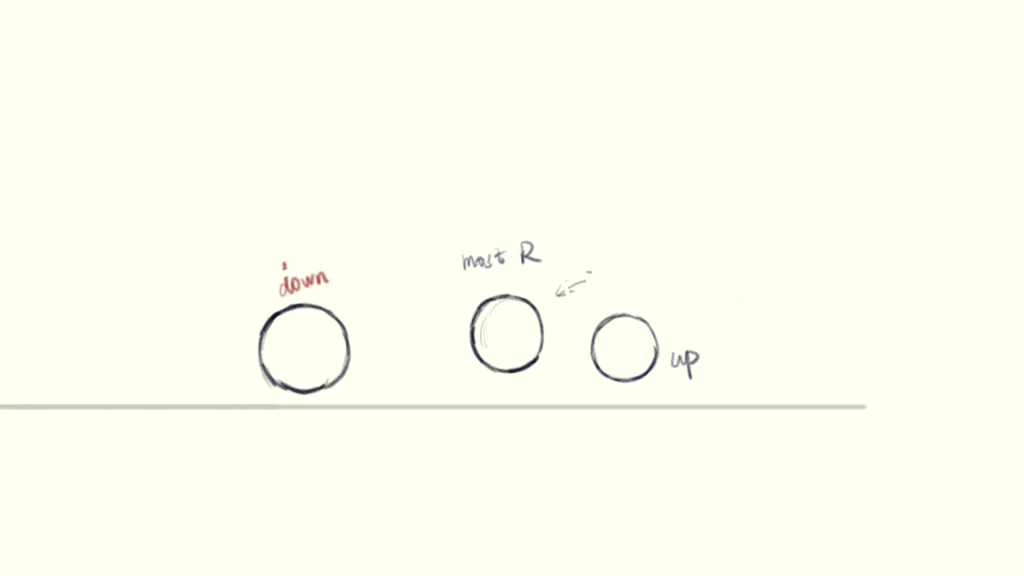
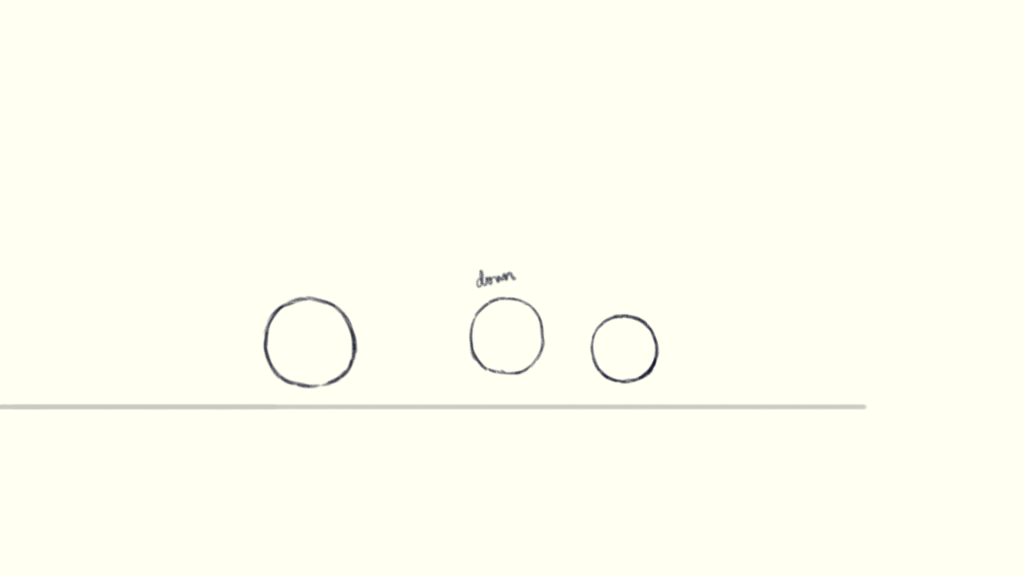
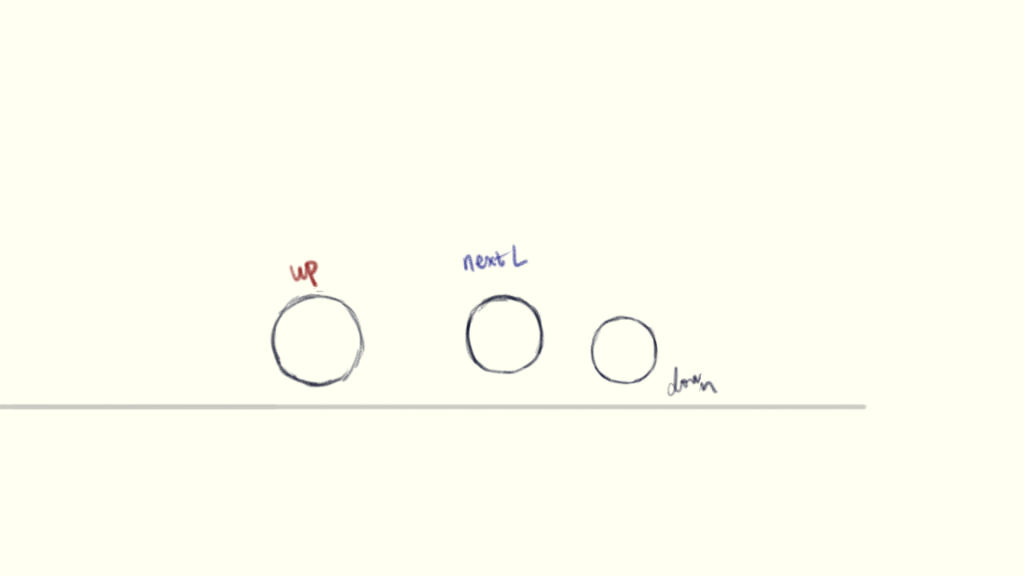
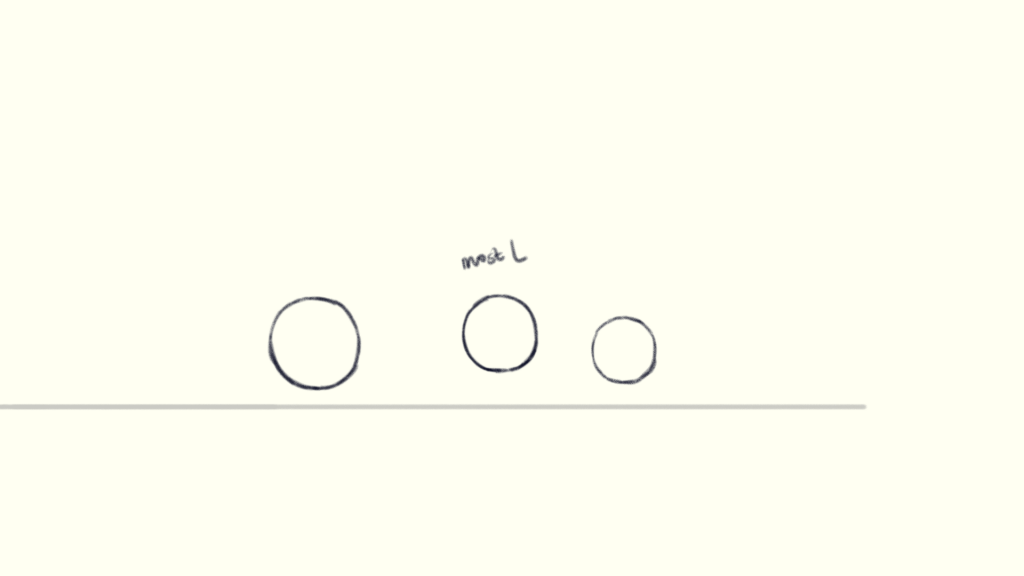
I choose to start from how the cat’s head, ribcage and pelvis moving. Because the head, ribcage and pelvis have no distinction between left and right, the .
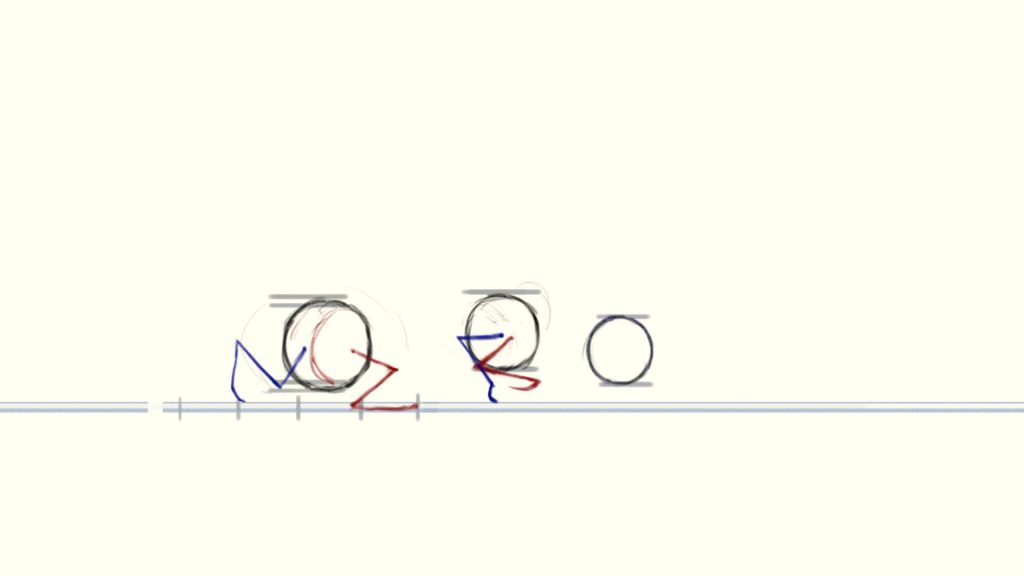
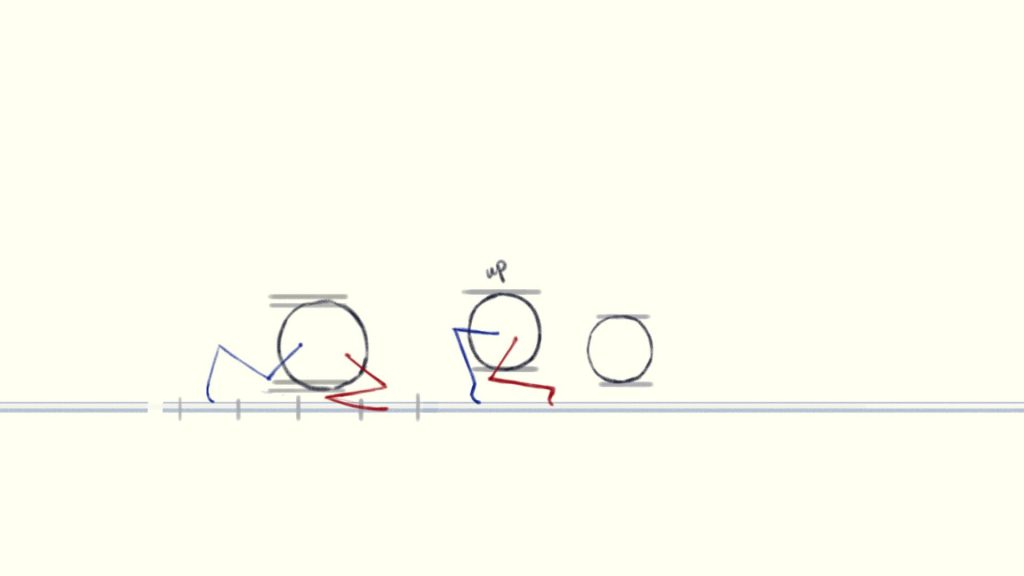
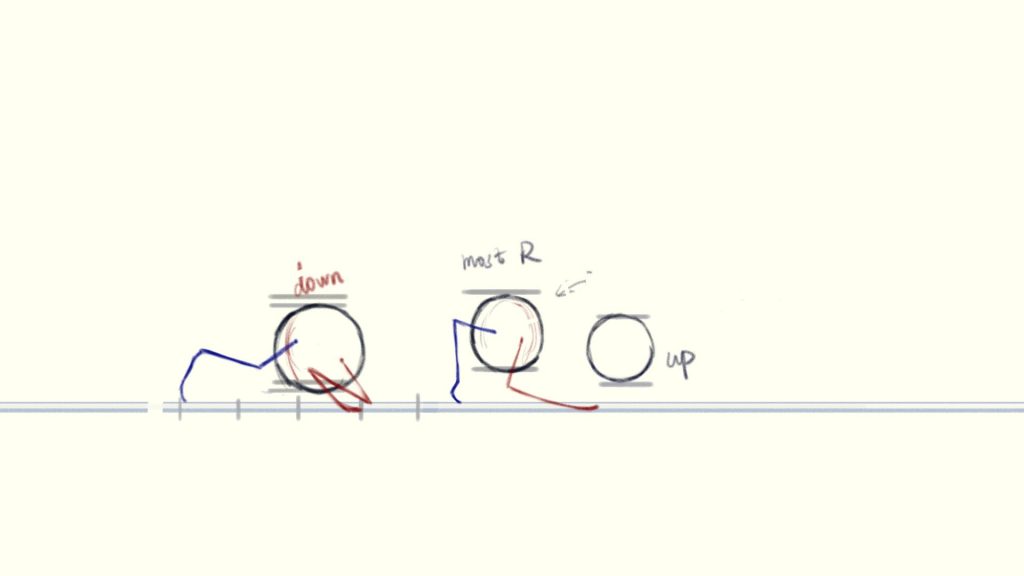
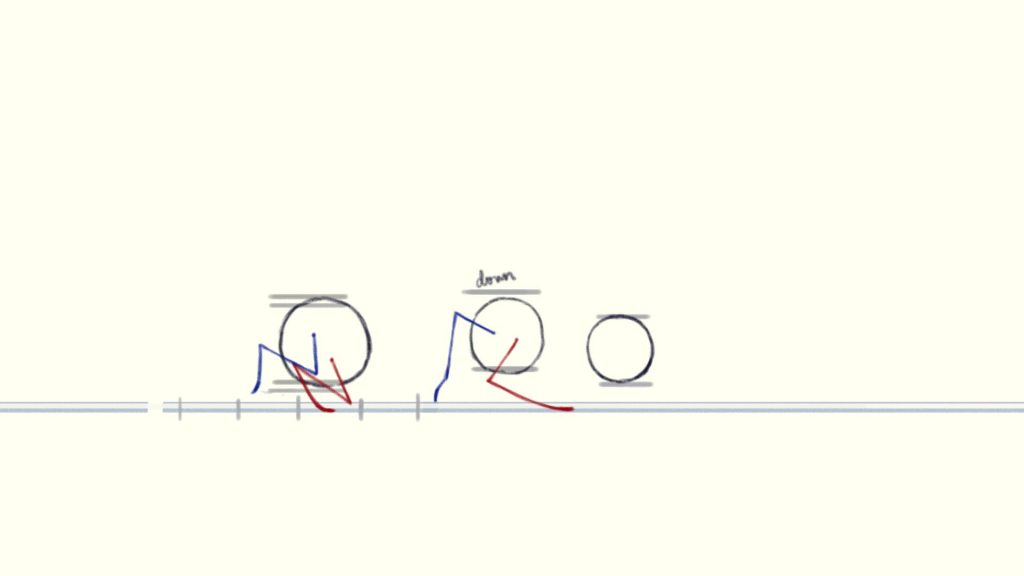
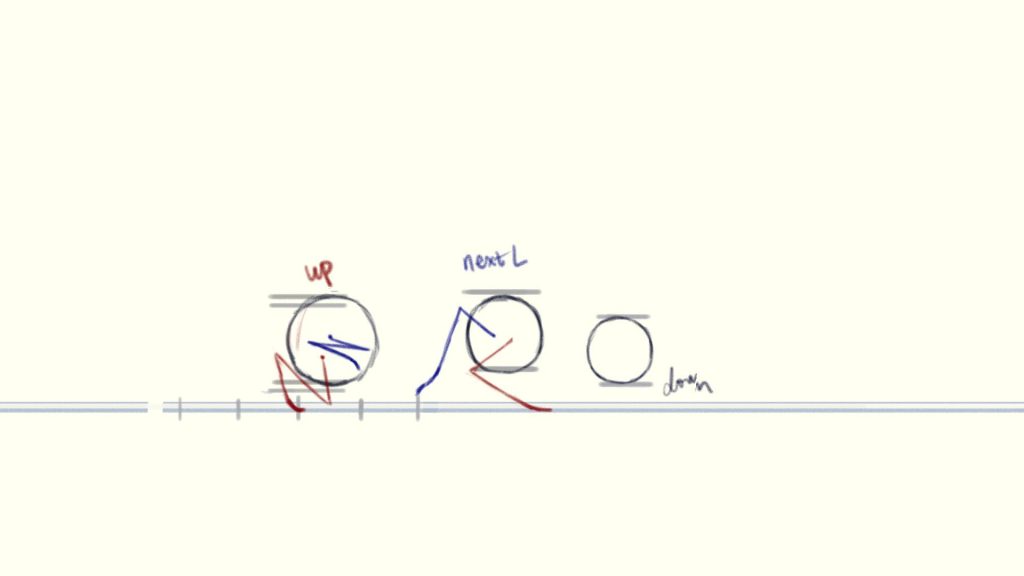
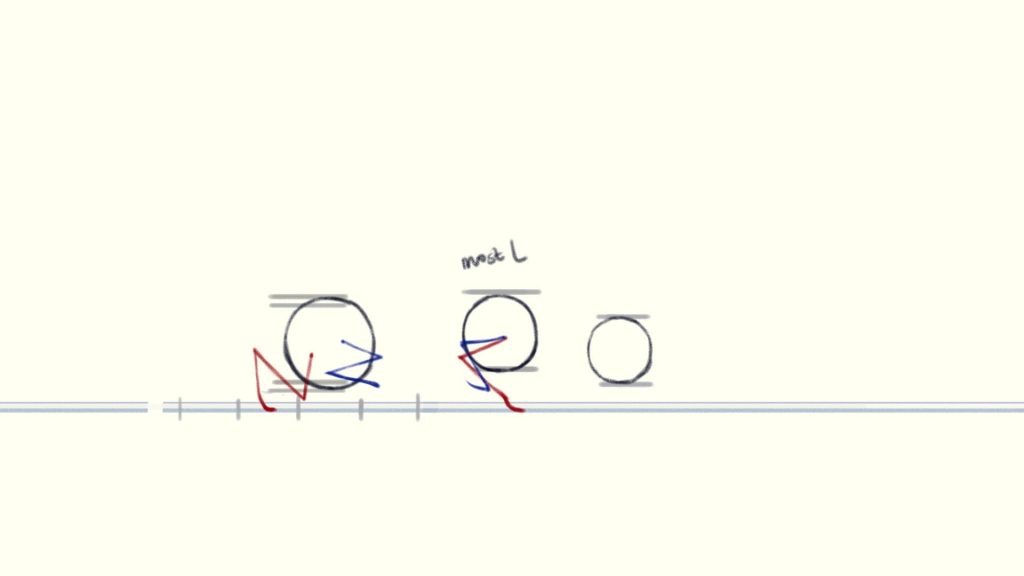
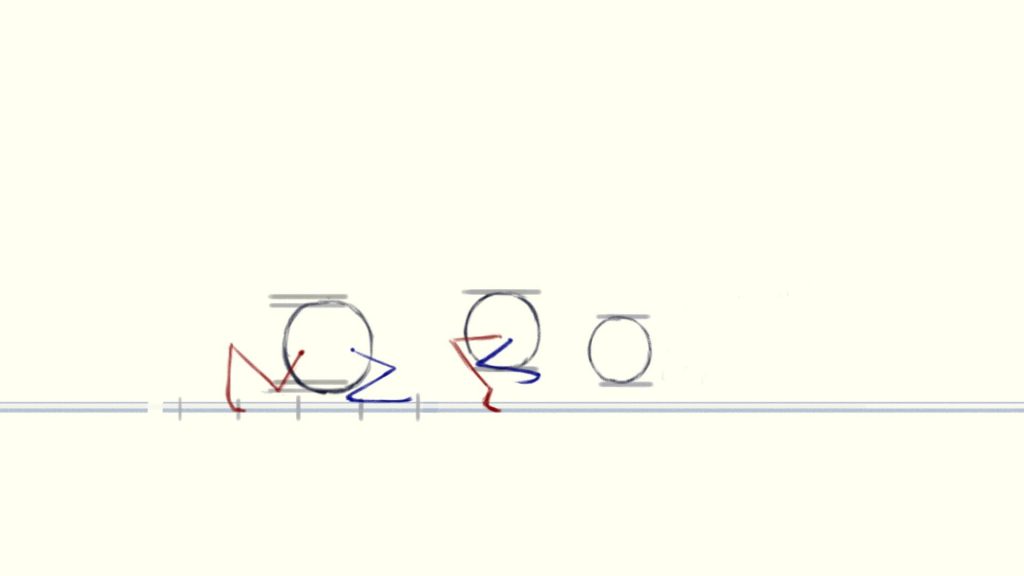
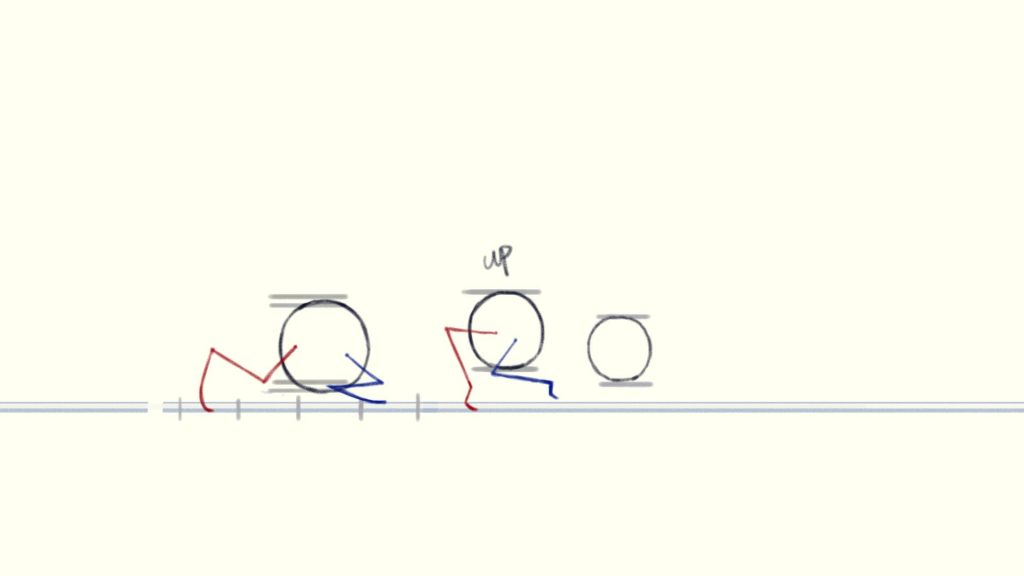
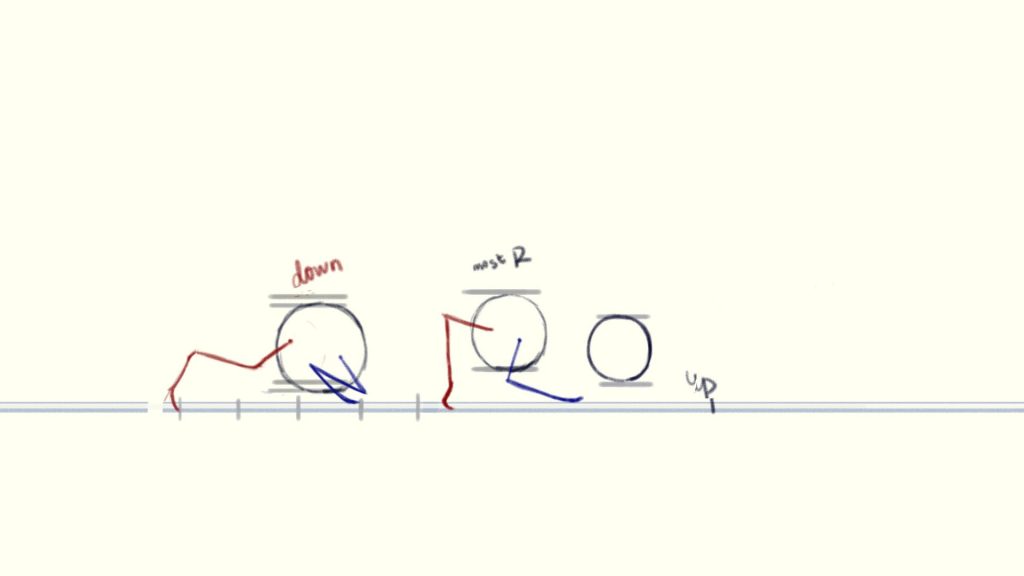
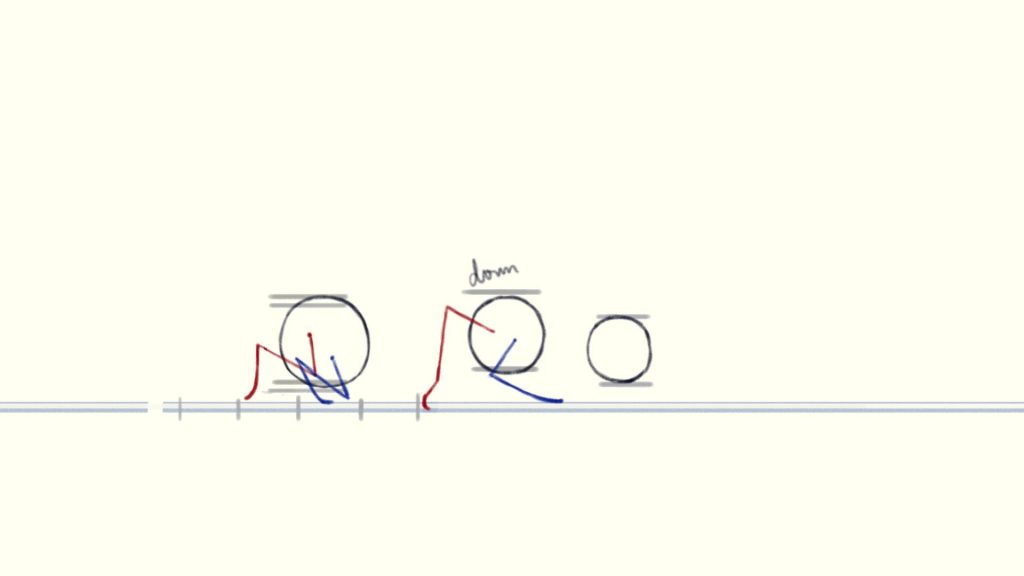
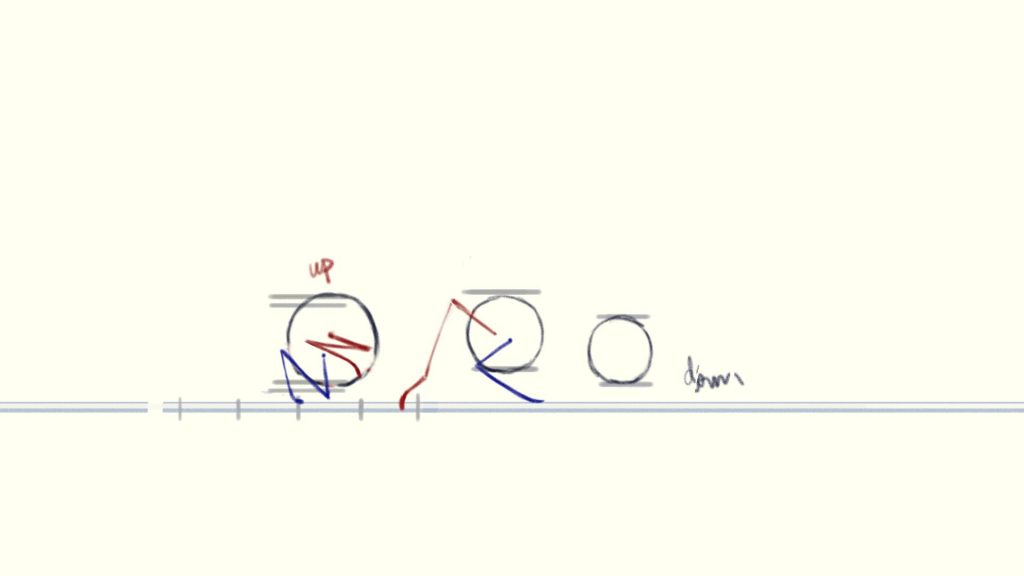
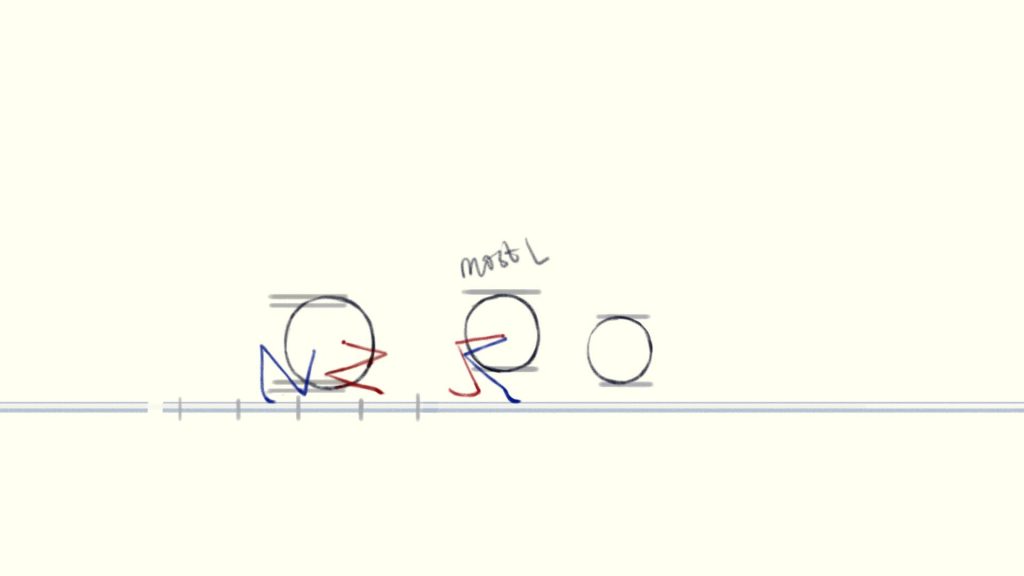
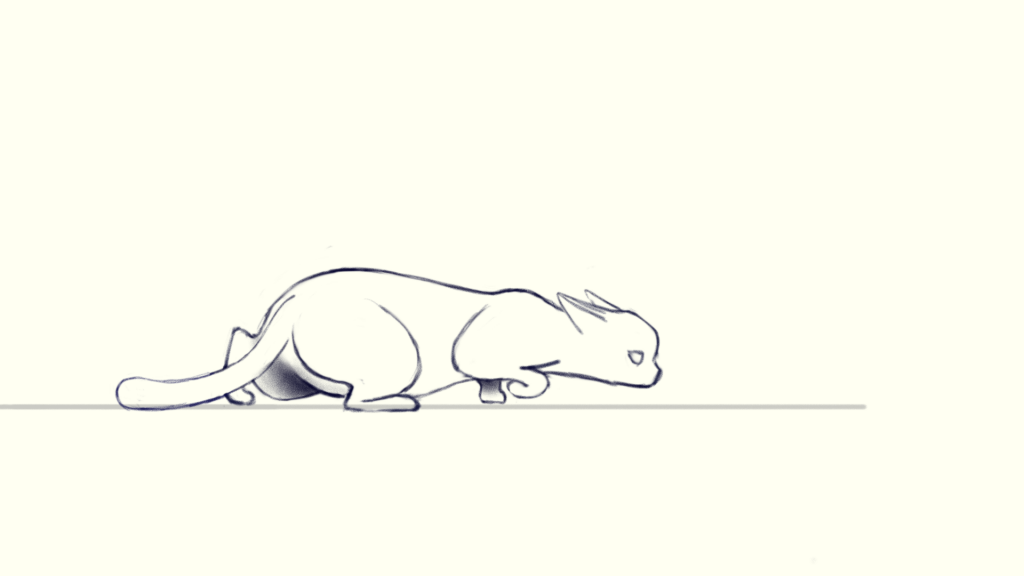
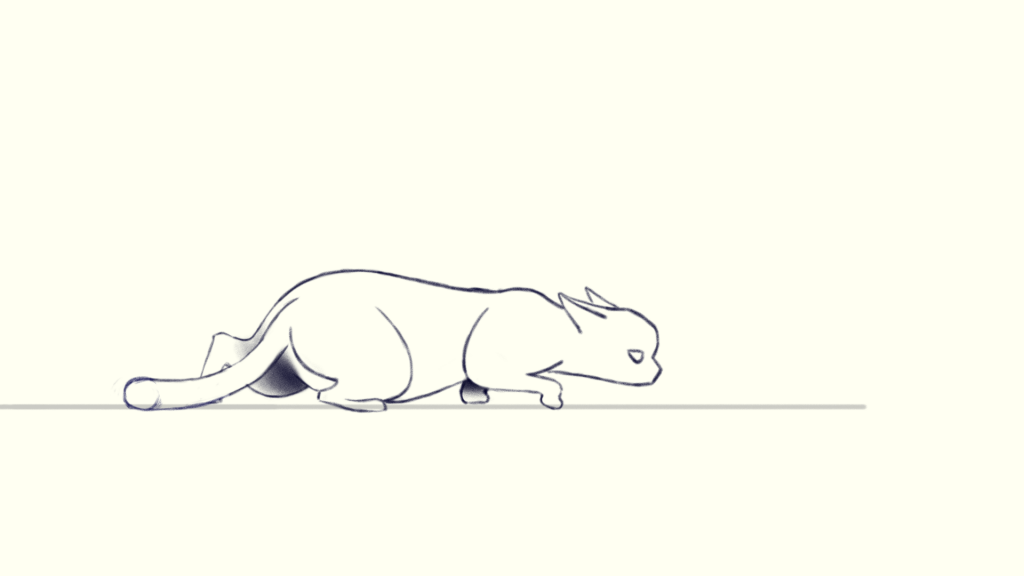
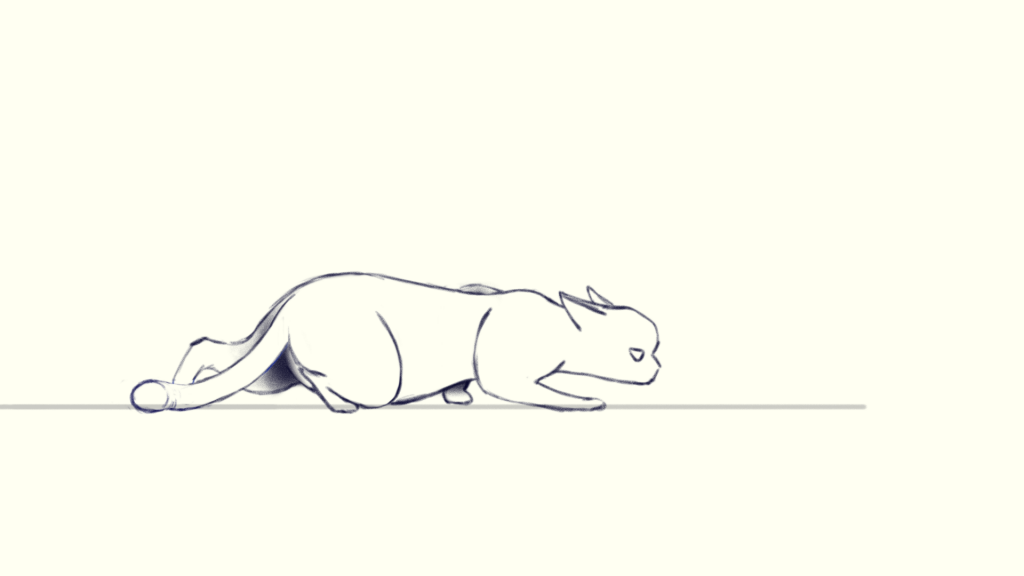
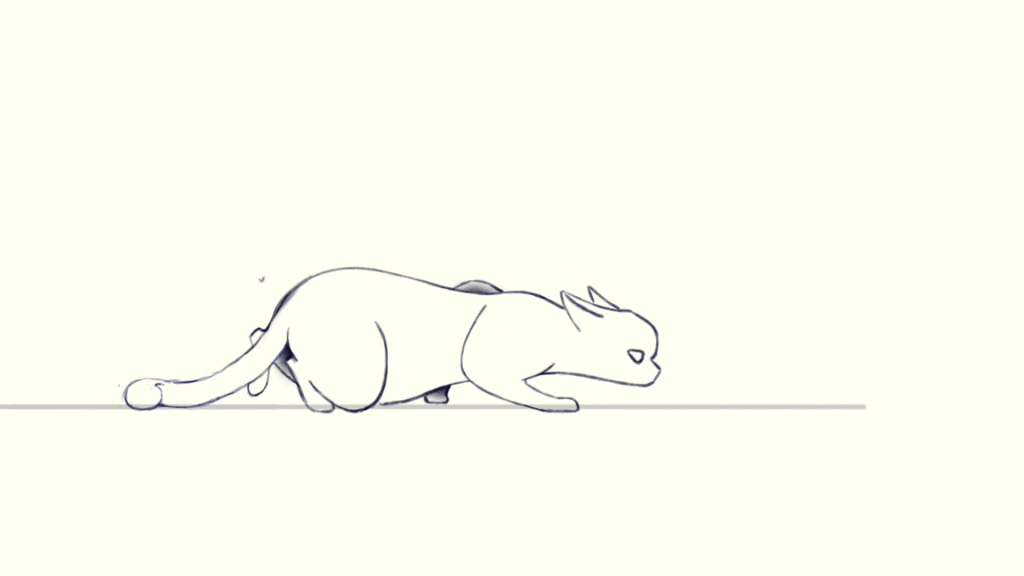
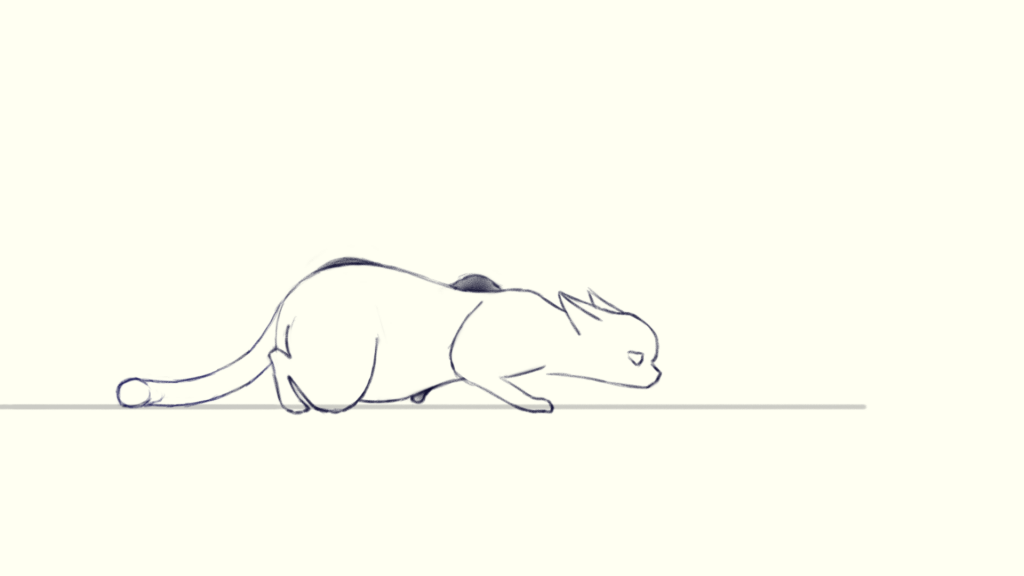
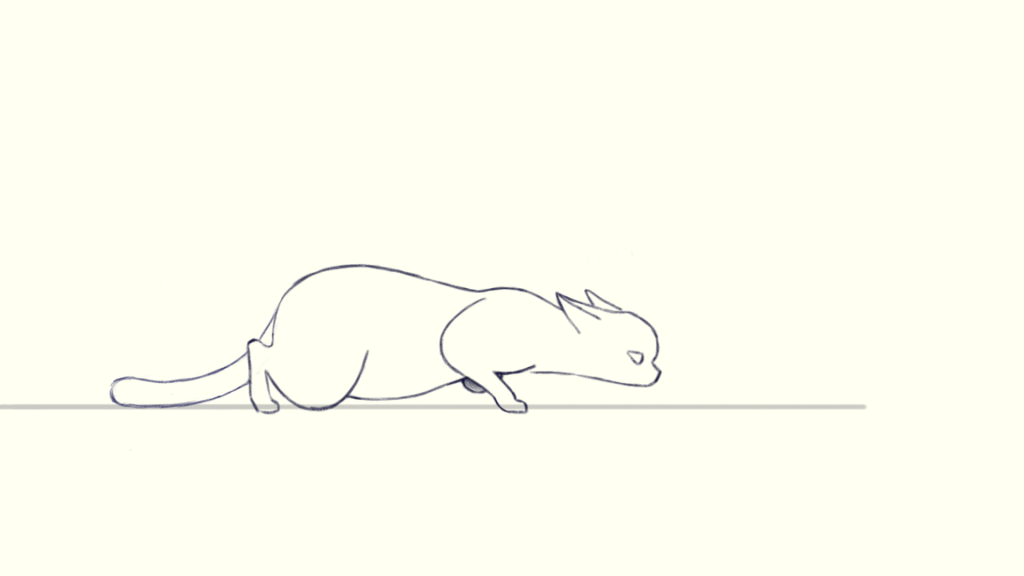
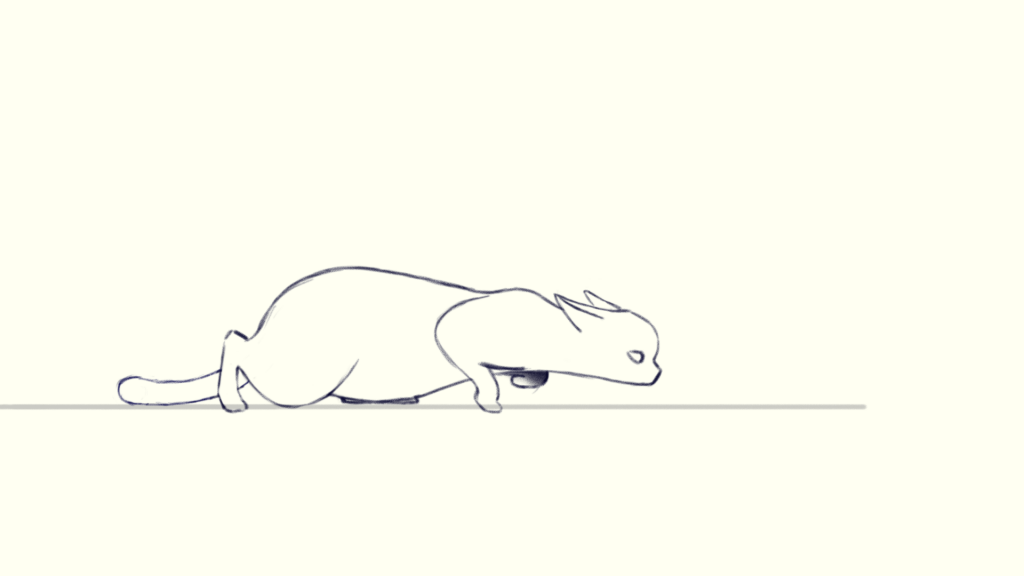
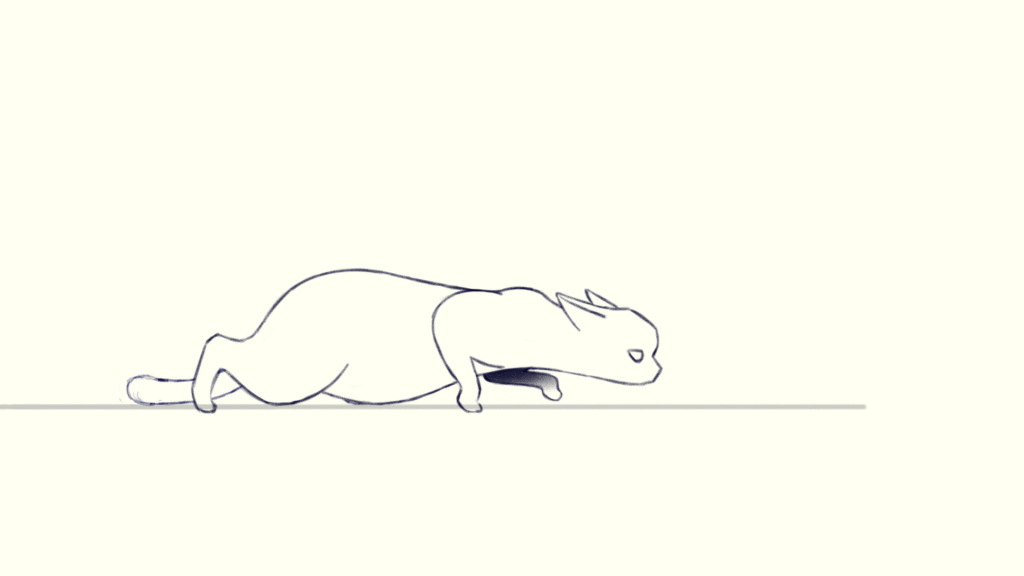
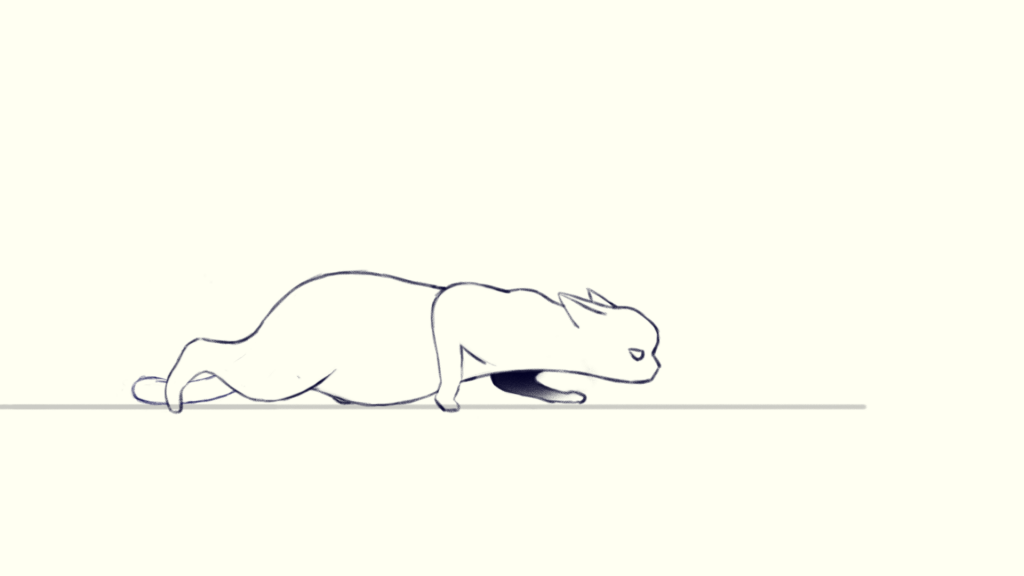
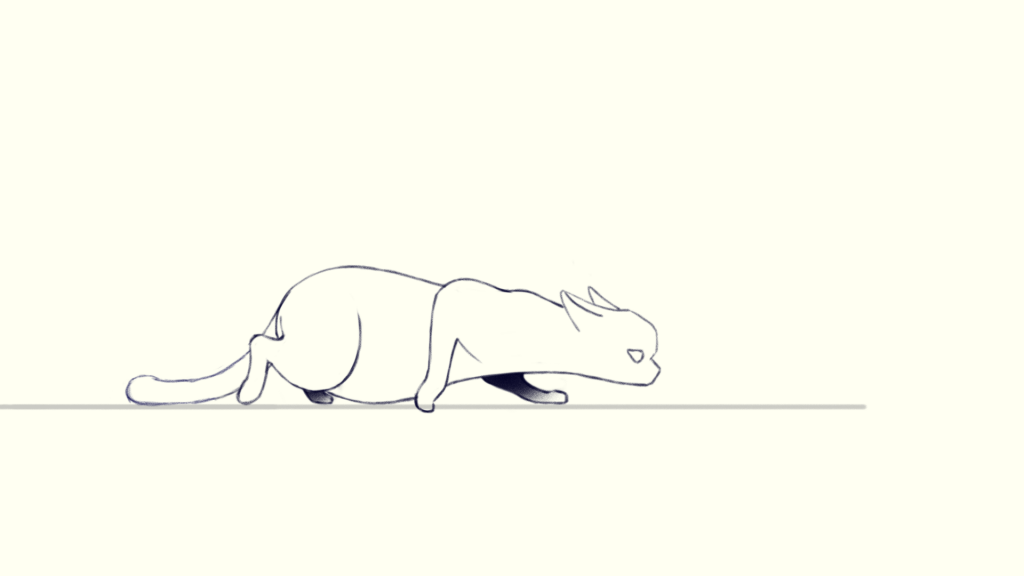
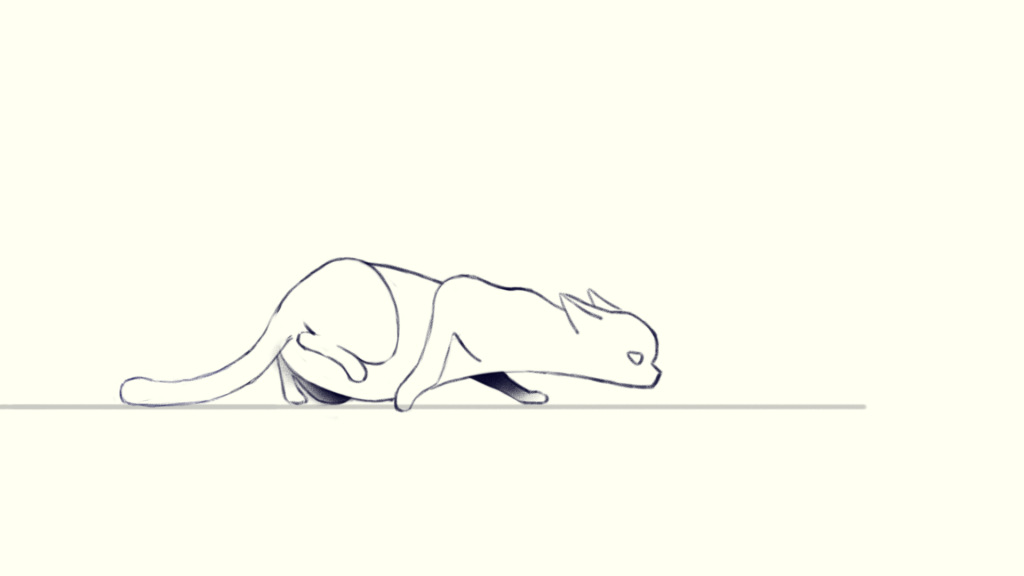
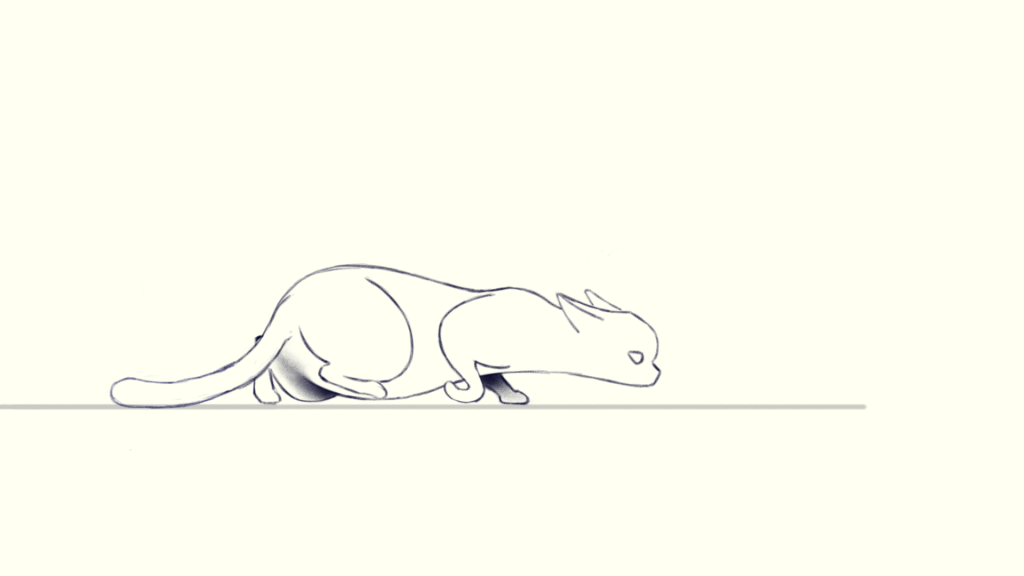
To make one step, the ribcage will have one highest point and one lowest point. As the rule shows, I take frame 2 and frame 4 as the highest point and one lowest point. This also suits the pelvis. I take frame 3 and frame 5 as the the highest point and one lowest point.
Because the legs are bent and stretched severely, the body should be squashed and stretched during walking. After observing the reference in detail, I noticed that when one of the cat’s hind leg stretches backward and the front leg is ready to take a step, its body is stretched to its longest length, which is frame 3. So I drew the ribcage furthest to the left in frame 3 to show the body stretches mostly. Correspondingly, the ribcage should be the furthest to the left in frame 6.
Another way to draw “squash and stretch” is to divide the ribcage and pelvis into separate parts. In the frame(or the next frame) where each part reaches its highest point, move it righter, and in the frame(or the next frame) where it reaches its lowest point, move it lefter.
The head is just move up and down due to animal head stability.
Legs
To draw the legs moving, just follow how the ribcage or pelvis move. Draw another line to show the perspective of ground, two side legs will walk on diffetent lines.
The secret to determining where the foot should be placed in each frame is: First find the two frames where the foot extends the furthest, and then divide that distance evenly according to the number of frames in between. (Some video said the secret to animate is timing and spacing, well I may think it’s math.)
Ears and Tail(Follow through)
The last thing is to add details like ears and tail. Just follow how the head or pelvis move and add a little bit of lay back, then you will get a tiptoeing cat!
Leave a Reply